
Preventive

Sealants

Protective coatings applied to back teeth to prevent decay in deep grooves and pits, especially beneficial for children and teenagers during cavity-prone years.
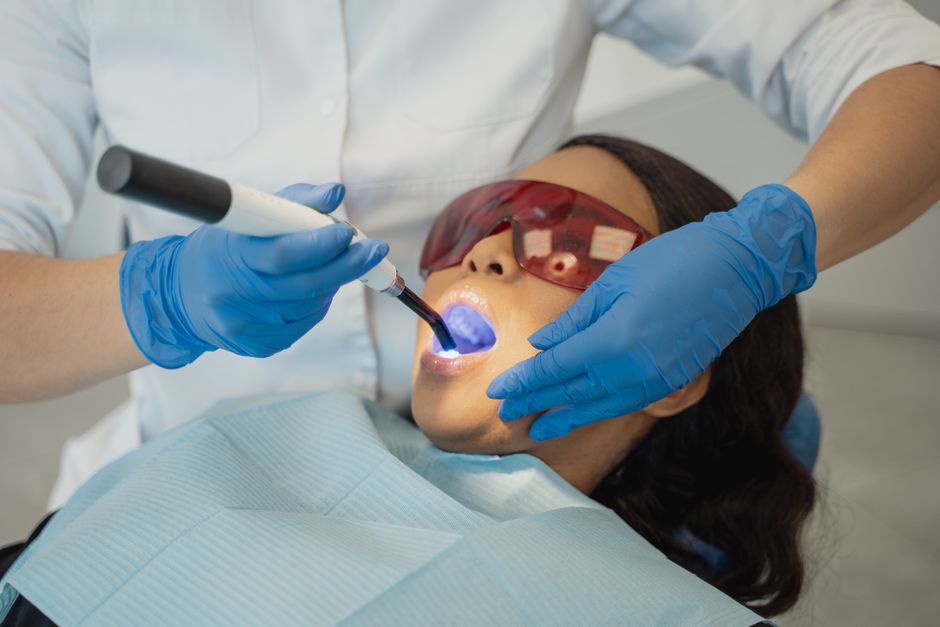
Dentist performing dental treatment using curing light on patient wearing protective eyewear.

What Are Dental Sealants?

A sealant is a thin, plastic coating applied to the chewing surface of molars, premolars, and any deep grooves (called pits and fissures) of teeth. More than 75% of dental decay begins in these deep grooves. Teeth with these conditions are hard to clean and are very susceptible to decay. A sealant protects the tooth by sealing deep grooves, creating a smooth, easy-to-clean surface.

Sealants can protect teeth from decay for many years, but need to be checked for wear and chipping at regular dental visits.


Who Benefits from Sealants?

Children and teenagers are ideal candidates. As soon as the six-year molars (the first permanent back teeth) appear or any time throughout the cavity-prone years of 6-16, sealants offer excellent protection.

Adults with tooth surfaces that have no decay but feature deep grooves or depressions can also benefit from sealants.

Baby teeth are occasionally sealed if teeth have deep grooves or depressions and the child is cavity-prone.


What Does the Sealant Process Involve?

Sealants are easily applied by your dentist or dental hygienist, and the process takes only a couple of minutes per tooth.

The teeth to be sealed are thoroughly cleaned and then surrounded with cotton to keep the area dry. A special solution is applied to the enamel surface to help the sealant bond to the teeth. The teeth are then rinsed and dried. Sealant material is carefully painted onto the enamel surface to cover the deep grooves or depressions. Depending on the type of sealant used, the material will either harden automatically or with a special curing light.

Proper home care, a balanced diet, and regular dental visits will help your sealants last for many years.

How it works
01

Clean and Prepare

We thoroughly clean the tooth and keep it dry with cotton to ensure a strong bond.

02

Apply Bonding Solution

A special solution is applied to the enamel surface to help the sealant adhere properly.

03

Paint and Cure

The sealant material is carefully painted onto the grooves and either hardens automatically or with a curing light.

04

Check at Regular Visits

We monitor your sealants at each checkup for wear or chipping to ensure continued protection.

Common questions
Are sealants only for children?+

No. While children and teenagers benefit most during the cavity-prone years of 6 to 16, adults with deep grooves or depressions in their teeth can also benefit from sealants to prevent decay.

How long do sealants last?+

Sealants can protect teeth from decay for many years. We check them at your regular dental visits for any wear or chipping to ensure they continue working effectively.

Does getting sealants hurt?+

Not at all. The process is quick, easy, and completely painless. We simply clean the tooth, apply a bonding solution, and paint on the sealant material. It takes only a couple of minutes per tooth.

Get in touch — Verona, NJ

Ready when you are — let's get you smiling.

New patients are always welcome. Give us a call, and we'll find a time that fits — gentle care, honest answers, no pressure.

  • No-pressure, unhurried first visit
  • We file your insurance for you
Call (973) 239-0032Contact us