
Orthodontic

Malocclusion Treatment

Expert diagnosis and treatment of malocclusions (misaligned bites) including overbites, underbites, and crowding. We help patients of all ages achieve healthier, straighter smiles.
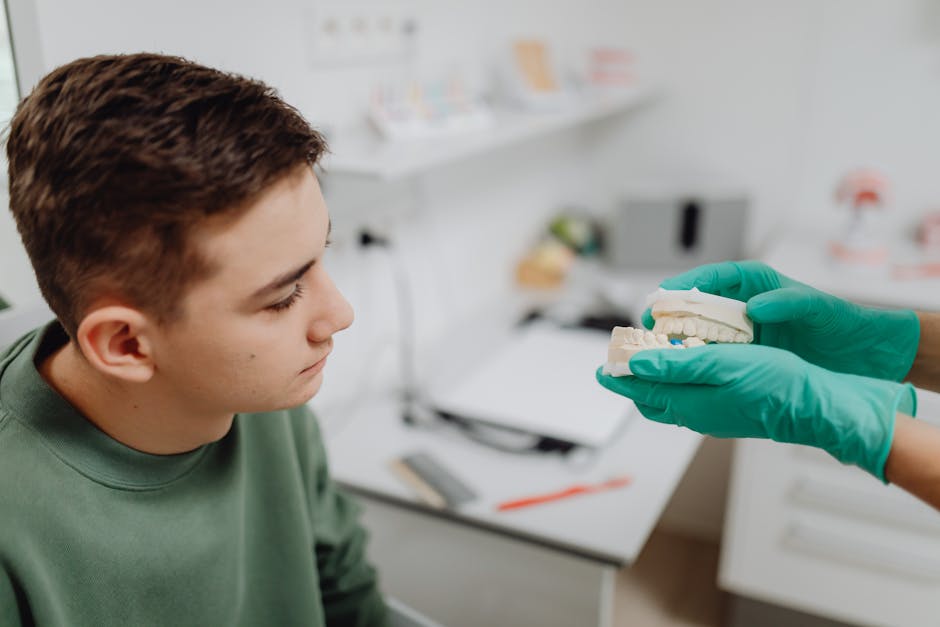
Teenager attending a dental consultation, examining a dental model held by a dentist wearing green gloves.

Understanding Malocclusion

A malocclusion is an incorrect relationship between the maxilla (upper arch) and the mandible (lower arch), or a general misalignment of the teeth. Malocclusions are so common that most individuals experience one to some degree. The poor alignment of the teeth is thought to be a result of genetic factors combined with poor oral habits or other factors in the early years.

Moderate malocclusion commonly requires treatment by an orthodontist. Orthodontists are dentists who specialize in the treatment of malocclusions and other facial irregularities.


Three Main Classifications of Malocclusion

Class I – The occlusion is typical, but there are spacing or overcrowding problems with the other teeth.

Class II – The malocclusion is an overbite (the upper teeth are positioned further forward than the lower teeth). This can be caused by the protrusion of anterior teeth or the overlapping of the central teeth by the lateral teeth.

Class III – Prognathism (also known as underbite) is a malocclusion caused by the lower teeth being positioned further forward than the upper teeth. An underbite usually occurs when the jawbone is large or the maxillary bone is short.


Why Treat a Malocclusion?

A severe malocclusion may lead to skeletal disharmony of the lower face. In a more extreme case, the orthodontist may work in combination with a maxillofacial dentist to reconstruct the jaw. It is never too late to seek treatment for a malocclusion. Children and adults alike have completed orthodontic realignment procedures and have been delighted with the resulting even, straight smile.


How We Treat Malocclusions

A malocclusion is usually treated with dental braces. We take panoramic X-rays, conduct visual examinations, and take bite impressions of the whole mouth before deciding on the best course of treatment. If a malocclusion is obviously caused by overcrowding, we may decide an extraction is the only way to create enough space for the realignment.

However, in the case of an underbite, crossbite, or overbite, there are several different orthodontic appliances available:

  • Fixed multibracket braces – This type of dental braces consists of brackets cemented to each tooth and an archwire that connects each one. We adjust or change the wire on a regular basis to train the teeth into proper alignment.

  • Removable devices – There are many non-fixed dental braces available to treat a malocclusion. Retainers, headgear, and palate expanders are among the most common. Retainers are generally used to hold the teeth in the correct position while the jawbone grows properly around them.

  • Invisalign® – These dental aligners are removable and invisible to the naked eye. Invisalign® works similarly to fixed dental braces but does not impact the aesthetics of the smile.


If you have any questions about malocclusions or would like to schedule a consultation, please contact our office.

How it works
01

Comprehensive Examination

We take panoramic X-rays, conduct visual examinations, and take bite impressions of your whole mouth to understand your specific malocclusion.

02

Customized Treatment Plan

Based on your diagnosis, we recommend the best orthodontic approach, whether traditional braces, removable devices, or Invisalign.

03

Active Treatment

We guide your teeth into proper alignment with regular adjustments and monitoring throughout your treatment journey.

04

Retention Phase

After alignment is complete, we use retainers to hold your teeth in their correct position while the jawbone stabilizes.

Common questions
Is it too late to treat my malocclusion as an adult?+

It is never too late to seek treatment for a malocclusion. Children and adults alike have completed orthodontic realignment procedures and have been delighted with the resulting even, straight smile.

What causes a malocclusion?+

Malocclusions are thought to be a result of genetic factors combined with poor oral habits or other factors in the early years. Most individuals experience one to some degree.

Will I need to have teeth extracted?+

If a malocclusion is obviously caused by overcrowding, an extraction may be the only way to create enough space for realignment. We will discuss all options during your consultation and examination.

Get in touch — Verona, NJ

Ready when you are — let's get you smiling.

New patients are always welcome. Give us a call, and we'll find a time that fits — gentle care, honest answers, no pressure.

  • No-pressure, unhurried first visit
  • We file your insurance for you
Call (973) 239-0032Contact us